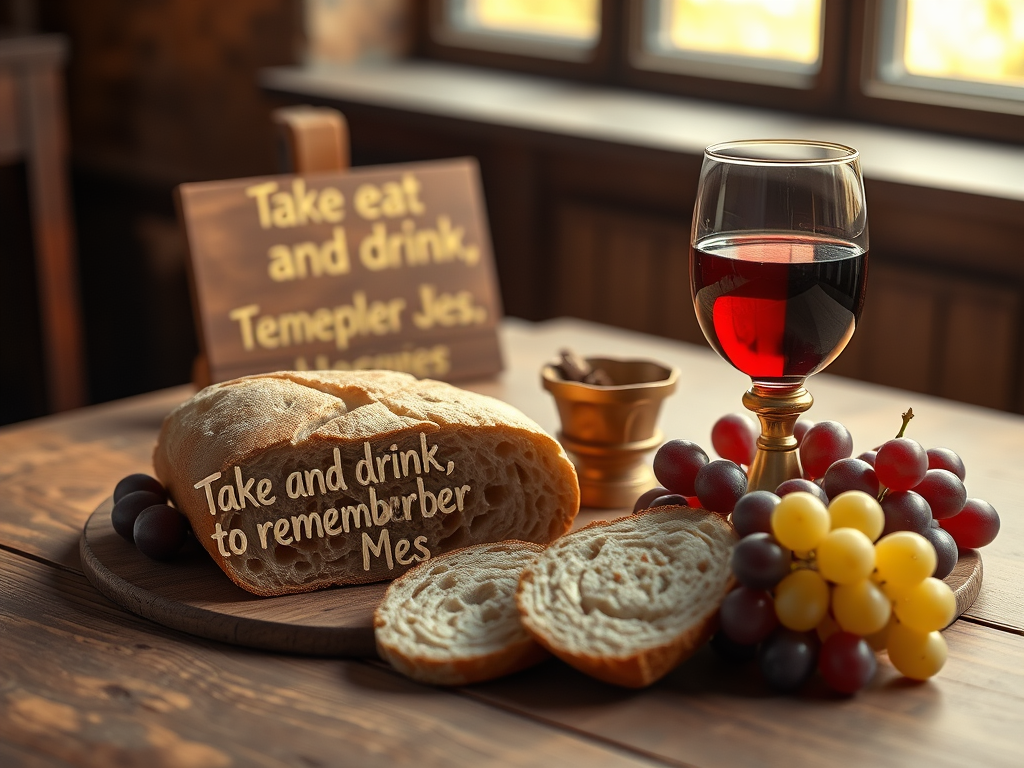
Devotional on Communion: Remembrance, Proclamation, and Self-Examination
Communion, often referred to as the Lord’s Supper, is a profound and sacred practice that invites believers to pause, reflect, and engage deeply with their faith. As we delve into the scriptures—1 Corinthians 3:16-17 and 11:24-25, 11:27-32—we find three significant themes: remembrance, proclamation, and self-examination.
Remembrance
In 1 Corinthians 11:24-25, Paul recounts the words of Jesus during the Last Supper, where He breaks the bread and shares the cup, saying, “Do this in remembrance of me.” Each time we partake in Communion, we are invited to reflect on the immense love and sacrifice of Christ. It’s a time to remember the body that was broken and the blood that was shed for our sins. This remembrance is not just a mental acknowledgment; it’s an invitation to engage our hearts and minds in gratitude for the salvation we have received. As we hold the elements in our hands, let us take a moment to appreciate the depth of that love and the gift of eternal life.
Proclamation
Communion is also a proclamation. In verse 26 of 1 Corinthians 11, Paul emphasizes that by eating the bread and drinking the cup, we are declaring the Lord’s death until He comes. This act is not merely a tradition; it’s a powerful statement of our faith and hope. Each time we share in this meal, we affirm our belief in Jesus as our Savior, Lord, and Redeemer. It’s an outward expression of the inward transformation that has occurred in our lives. By participating in Communion, we join a global community of believers, unified in our declaration of His sacrifice and our anticipation of His return.
Self-Examination
Additionally, Paul urges us to engage in self-examination before partaking in Communion (1 Corinthians 11:27-32). This is a time for introspection and honesty before God. Are there areas in our lives that need healing or forgiveness? Are there relationships that require reconciliation? As we reflect, we open ourselves to the Holy Spirit’s guidance, allowing Him to reveal any unresolved issues that may hinder our relationship with God and others. This examination is not meant to bring guilt but to foster an authentic connection with our Creator. Through this process, we can approach the table with purity and sincerity, ready to receive the grace that flows from it.
Conclusion
Communion is a beautiful tapestry of remembrance, proclamation, and self-examination. It invites us into a deeper relationship with Jesus and challenges us to live out our faith actively. As we gather around the table, let us do so with hearts full of gratitude, voices lifted in proclamation, and minds ready for reflection. May this sacred practice draw us closer to Christ and empower us to live out His love in a world that so desperately needs it.

Leave a comment